





Find out how to design a retreat home:
A “retreat” home is designed for artistic and/or meditation practices, or those that can become such, all integrated with nature—where possible—and lightweight technologies. Spaces that transform into studios and/or yoga areas, with the right lighting, the finest natural materials, and our modular solutions with phyllotactic layouts designed together to create a space that is both calming and stimulating.
The home retreat is trending in these times of hybrid work, stress, and a strong, much-needed focus on physical and mental well-being. It stems from the overlapping of creative practices and wellness routines in daily life, where a domestic space can be managed and transformed into a space designed to slow down, inspire, and nurture the body.
The idea is simple yet powerful: areas dedicated to art and yoga practice, organized around a philosophy of natural materials, balanced lighting, and a connection to the outdoors.
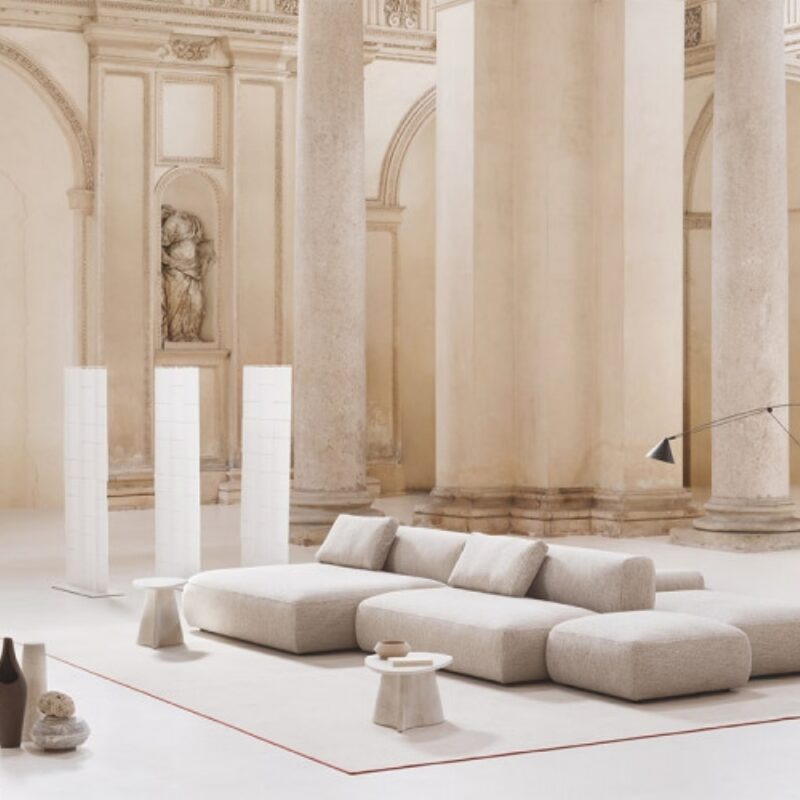
Modular spaces for art and meditation
The frame of a house thus extends with simple attentions towards our needs.
The use of movable walls, lightweight screens, curtains, and multifunctional furnishings—which can be easily arranged within the space without disrupting the flow of light—along with neatly displayed containers, which not only reduce clutter but also promote concentration, can thus meet this need for well-being.
The use of movable walls, lightweight screens, curtains, and multifunctional furnishings—which can be easily arranged within the space without disrupting the flow of light—along with neatly displayed containers, which not only reduce clutter but also promote concentration, can thus meet this need for well-being.
Thus creating, in a simple plan, a movement of vertical planes that define, where necessary, areas of visual privacy with all the benefits of light that can be exploited in one’s environment.
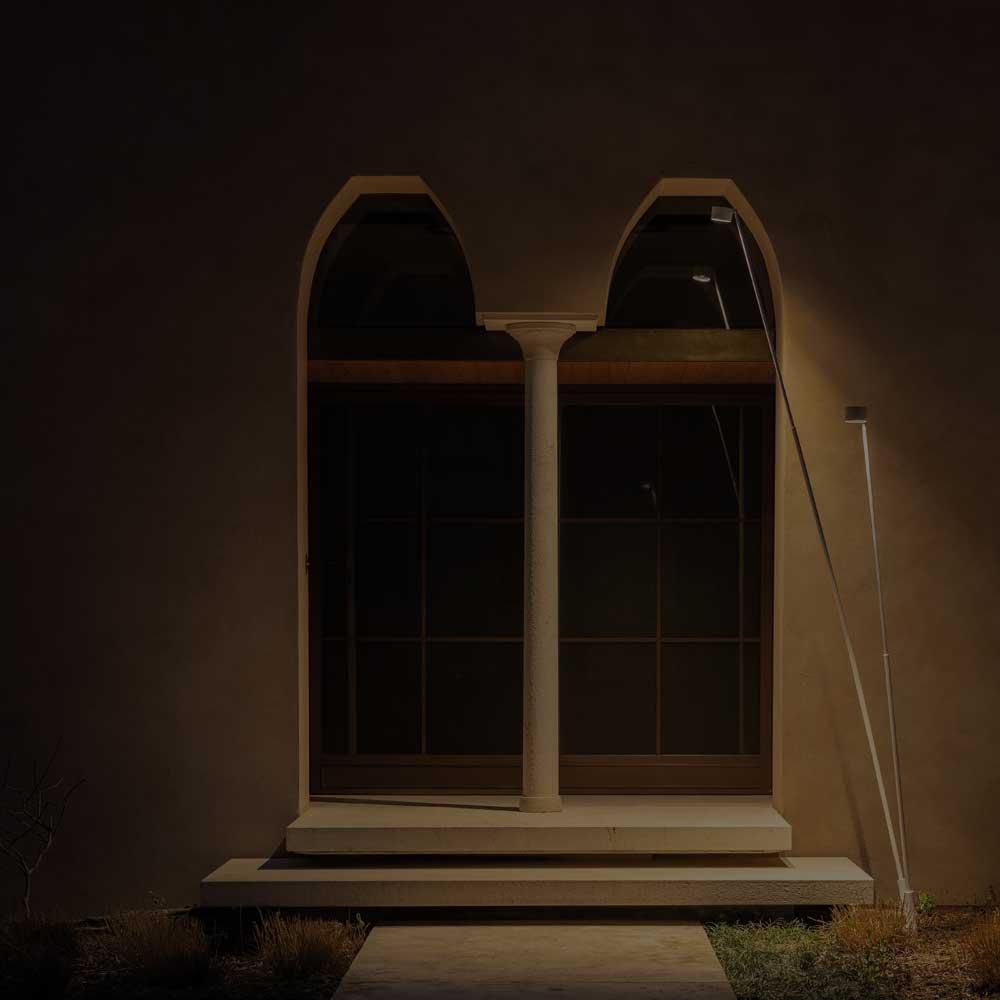
In a retreat home, light isn’t just a detail: it’s a tool for emotional regulation. This is why it’s important to maximize natural light by using filtering curtains, glass, and, where possible, mirrors arranged to maximize the views to the outside, reducing any heavy, obscuring visual barriers present in the structure.
Layered lighting: Soft general lighting is preferable, as opposed to the lighting used for studying and working. For the evening, meditation, and evening yoga sessions, low, warm lighting is ideal. A warm temperature of around 2700K ensures a cocooning effect.
Natural palettes, textures, and materials for biophilic design.
Neutral palettes with natural accents are the key aspect in this space because they guide concentration and lead to an elevation of the vital state.
In addition to color, it’s important to pay attention to materials (in the Materials section of our website, you’ll find some selected ones from our showroom collection). Ideal materials are natural ones such as wood, stone, and fabrics like cotton, linen, wool, and silk, for a tactile sensation that helps the inner connection be reflected in a calm and welcoming environment.
An environment where biophilic design integrates natural elements: sunlight, materials, and organic shapes to connect you to the natural environment through that innate human affinity with nature.
A harmonious whole that promotes well-being, productivity and mental health.
The goal is to create a calming, inspiring environment for you with natural tones, in light or dark tones depending on your personal style, which must be absolutely respected in every nuance.
Neutral main walls, wooden furniture, natural fabrics, green and terracotta accents for details and visual flavors.
Even a scent—from niche artistic perfumeries—is an essential element in an environment where all the senses are put at ease. The “Sensory Note” is consistent with the retreat concept: therefore, introducing a discreet olfactory profile (artistic perfumeries, lavender/woods/cedar) helps “mark” the transition from routine to ritual.
Style ideas and practical examples
Japandi: Warm minimalism: light wood, clean surfaces, few significant objects.
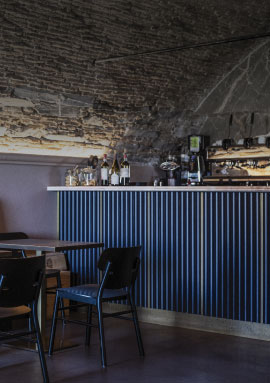
Contemporary Mediterranean: Neutral colors with touches of blue, terracotta, natural ceramics.
Contemporary Mediterranean: Neutral colors with touches of blue, terracotta, natural ceramics.
Modular “Palchetto” sofa by Kristalia
Wabi-Sabi: Celebrated imperfection: slightly irregular surfaces, natural materials, calm atmospheres.
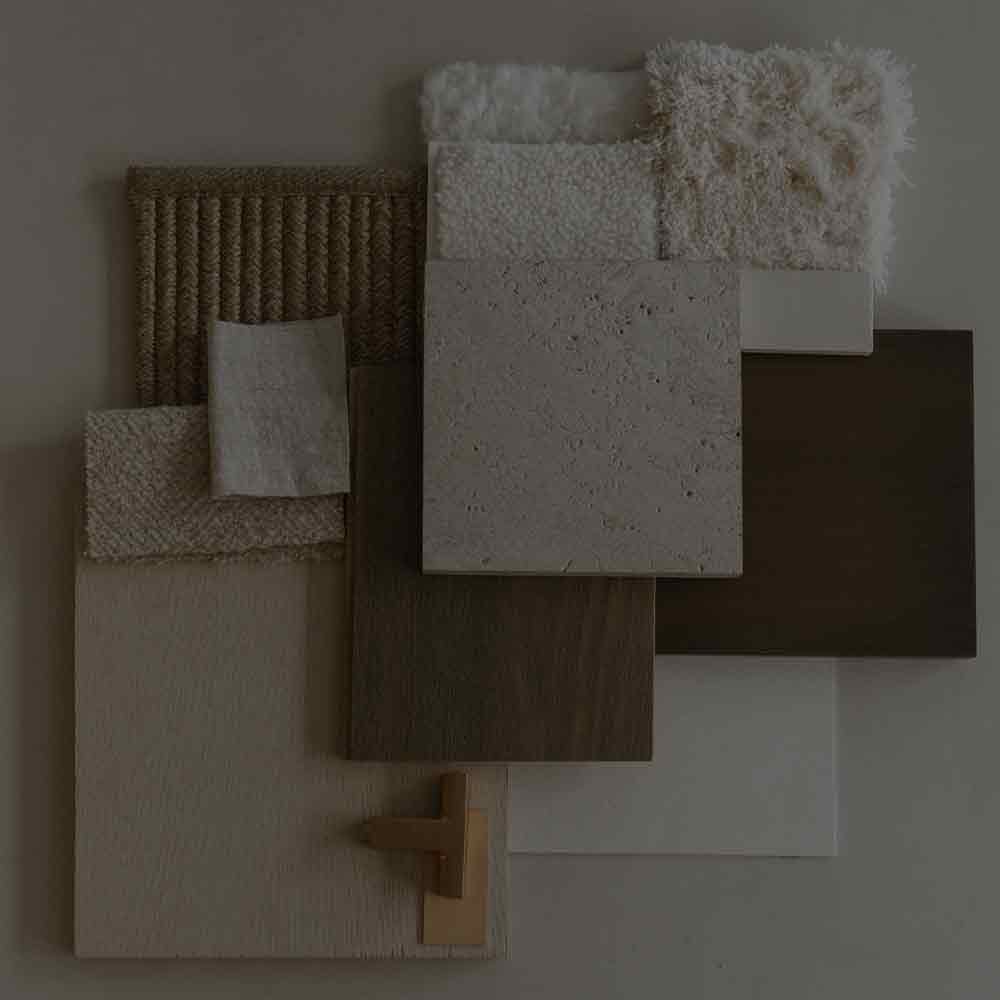
In this article, I’ve included mood boards to help you visualize materials and colors. Natural fabrics: what to use and where. As mentioned, fabric plays a fundamental role, and linen, like cotton, is the “guiding fabric.” Washed linen curtains (medium weight): filter light and “soften” acoustics. Linen sofa covers/throws: worn look, dry feel. Raw linen cushions: noticeable texture, neutral or sage green palette. Cotton (comfort and practicality). Cotton or cotton-jute rug: easier to manage and perfect for layering. Cotton cushion covers (including canvas): durable, washable. Quilted cotton blanket: adds “body” without weighing things down. An extra tip: mix crumpled linen with compact cotton to avoid the “all the same” effect and instead create layering (rug + throw + cushions) for “visual comfort.”
Materials and textures (ideal swatches)
Light wood (oak/ash): coffee table, shelves, benches. Jute or sisal for rugs or decorative details like baskets and useful containers. Matte ceramic adds a touch of class to vases, bowls, and trays (sand/terracotta tones). Ribbed or frosted glass can be useful because, in addition to creating material plasticity, it diffuses light, for a spa-like look.
Another material to consider for an accent touch is matte black metal, brass, sandblasted brass, as could be the case for handles or the stem of a lamp or wall lamp.
Conclusion: the retreat is not a room, it is a method
Transforming your home into a personal retreat isn’t about chasing a perfect aesthetic, but rather building a simple and coherent system of light, texture, order, and flexibility. A few right elements—natural fabrics, balanced palettes, movable furnishings, and an open center—are all it takes to create a space that truly embraces you: during creative days, during practice sessions, and when you simply need to slow down.
Want to turn your living room into a yoga space or a studio where you can unleash your creativity without sacrificing style? Provide your floor plan and a few photos of the space if we can’t arrange an immediate inspection. We’ll then provide you with a “free-center” mini-plan with a Japandi or soft Wabi-Sabi palette and a list of materials.