




How to get inspired by a film
When we need ideas for decorating our home, it’s natural to draw inspiration from the films that have shaped cinematic history. Cinema, in fact, is more than just visual storytelling, but a powerful aesthetic language capable of influencing tastes, styles, and trends over time.
This has always happened in the fashion world, too. Often, a film becomes an integral part of a trend: Luc Besson’s Joan of Arc, for example, inspired designers like Paco Rabanne and Helmut Lang in the 2000s, all the way up to Blumarine, which reinterpreted its aesthetic in its Fall/Winter 2023–2024 collection.

The influence of great cinematic works, however, extends not only to fashion, but also to interior design. For this reason, numerous films have become a point of reference for interior designers and planners, representing a powerful form of inspiration, capable of being updated in the contemporary living context.
With our consultancy, all this can become real.
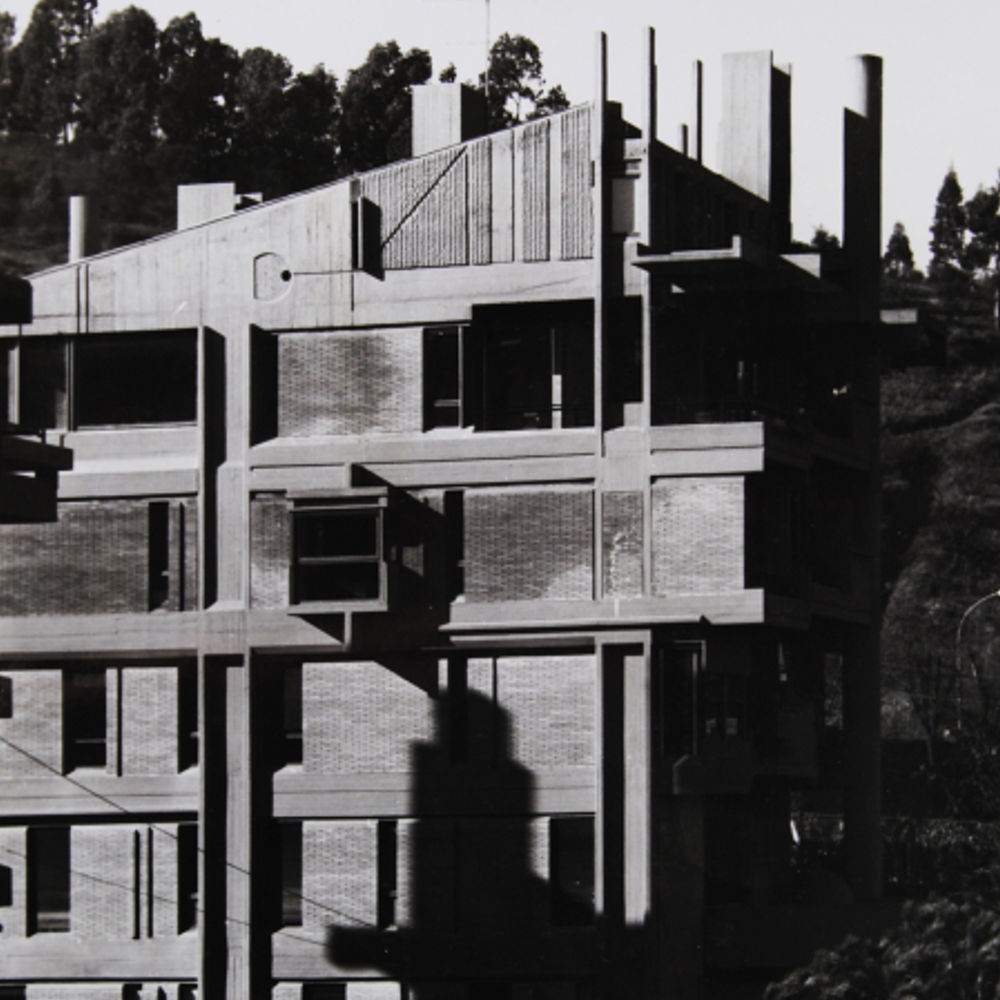
A prime example is the famous film Investigation of a Citizen Above Suspicion, which features the Villino on Via Colli della Farnesina in Rome, designed by architect Francesco Berarducci. Some of his drawings and scale models are now preserved at the MAXXI museum in Rome.
Here, the visitor is immediately captured by Ennio Morricone’s soundtrack, which accompanies a historical tale of brutalist architecture, amidst images and scenes from Elio Petri’s film (1970) projected on a loop by a 1970s television.
The film received numerous awards: an Oscar nomination for Best Screenplay, an Oscar Award for Best Foreign Language Film, a David di Donatello Award for Best Film and Best Actor, a Nastro d’Argento Award for Best Director and Best Actor, as well as two Golden Globe Awards for Best Film and Best Actor.
Architecture and cinema
The exposed reinforced concrete architectural structure, typical of the Brutalist style, is the dominant element and helps to accentuate the dramatic sense of the narrative.
The Kafkaesque quality of the film, often depressing and suffocating, is amplified by the rooms of the Villino, which, with their “ugliness/beauty”—a true architectural oxymoron—become a masterpiece. Despite the large, bright windows, Elio Petri treats them as a claustrophobic space, a veritable philosophical prison.
Setting and furnishings
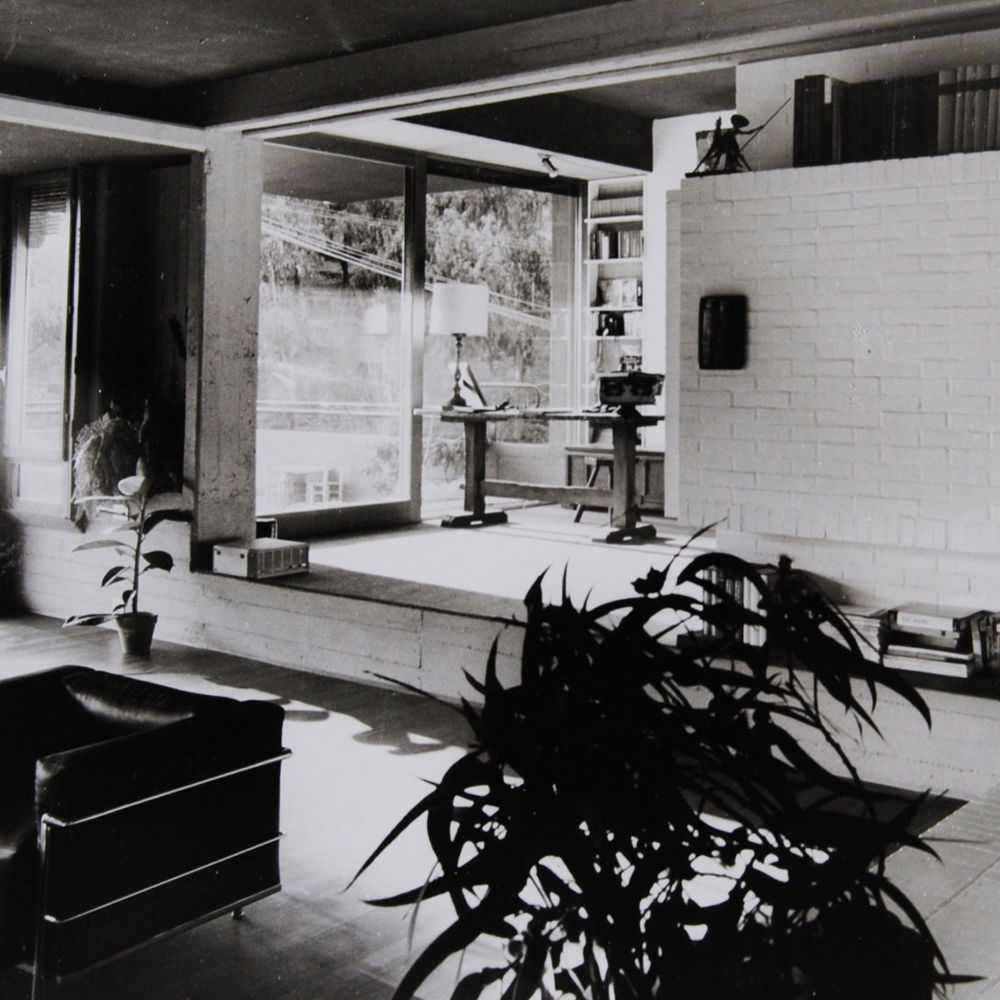
In the film directed by Elio Petri and starring Gian Maria Volonté and Florinda Bolkan, it’s impossible not to be struck by the setting. The interiors, where much of the story unfolds, are those of Berarducci’s own home, characterized by concrete partition walls and parapets sometimes painted white.
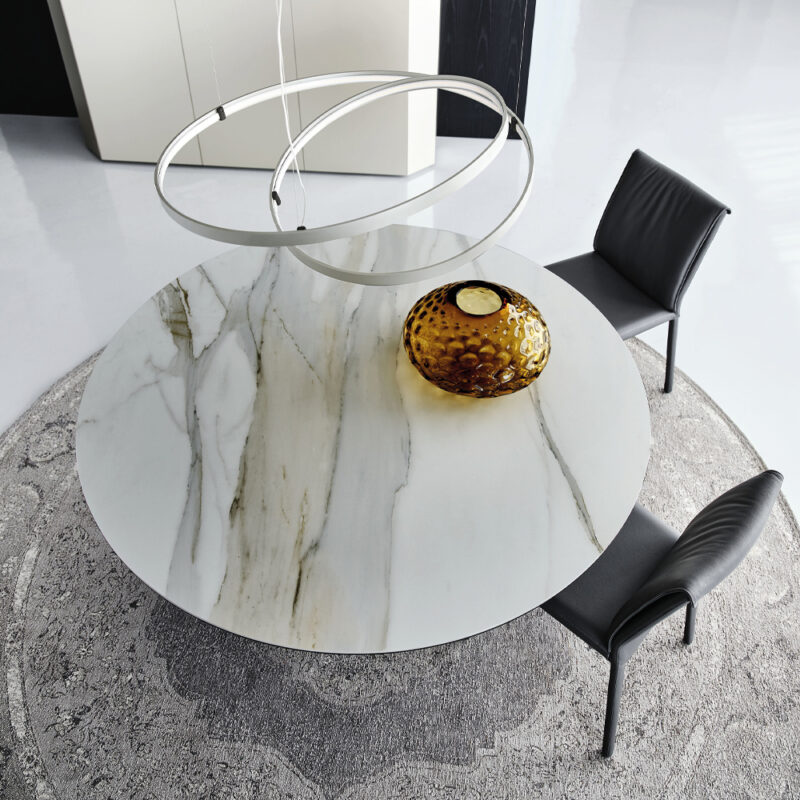
All the furnishings were custom-designed, as was customary at the time, incorporating some historic design pieces. Today, as then, this is possible thanks to the work of artisans—blacksmiths, carpenters, decorators, and upholsterers—with whom we design to create unique, high-quality pieces.
The client, a highly educated individual, sought unique, original tailoring; a philosophy of refinement that we still strive to maintain today.
With an ideal camera movement, the shot opens onto the living room: empty, clean, bright, impeccable. It is one of three antithetical locations around which production designer Carlo Egidi sets the entire story.
The spaces feature a pronounced horizontality; flat, diffused light pours down from above through geometric beams or gaps between walls and suspended ceilings. Rooms and corridors reveal their monastic, minimalist ambiance.
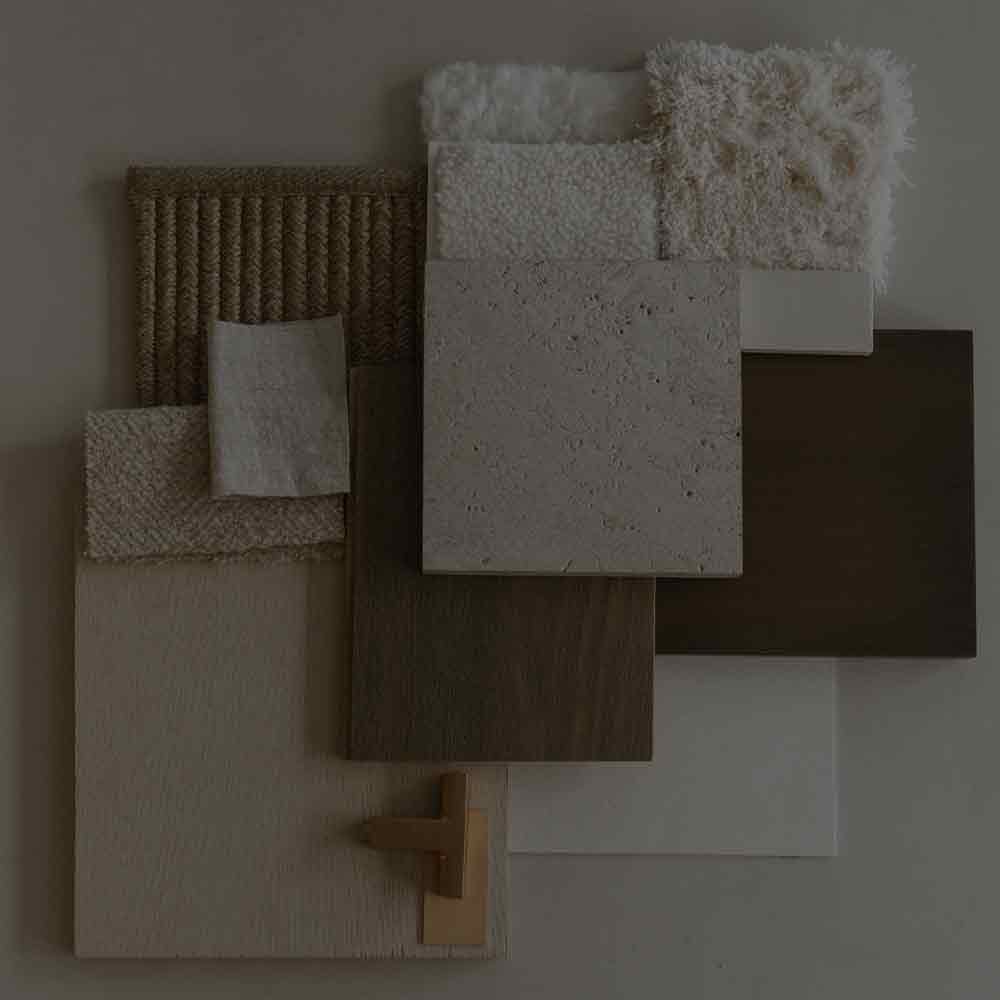
A few pine furnishings emerge as the only tone of color against the grayish background of the concrete, a clear reference to the great masters of béton armé such as Le Corbusier and Louis Kahn.
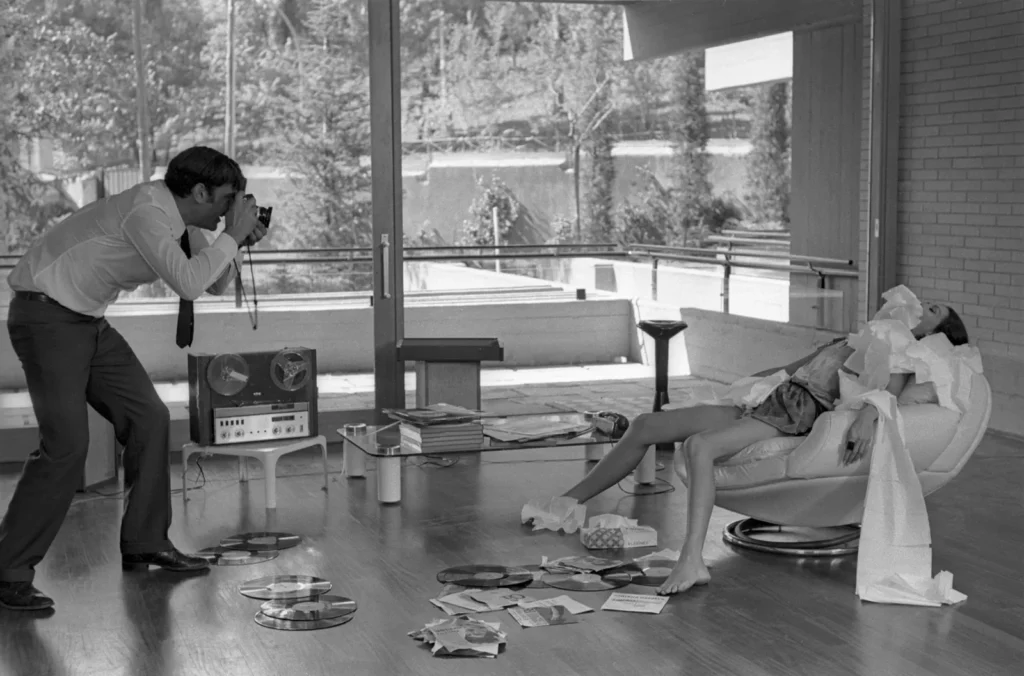
The Villino’s large, minimalist room becomes a limpid confessional, where the murderer, in a delirium of omnipotence, recounts his crime into a tape recorder. It’s the stage for a story told “out in the open,” ignored by his superiors to preserve the balance of power.
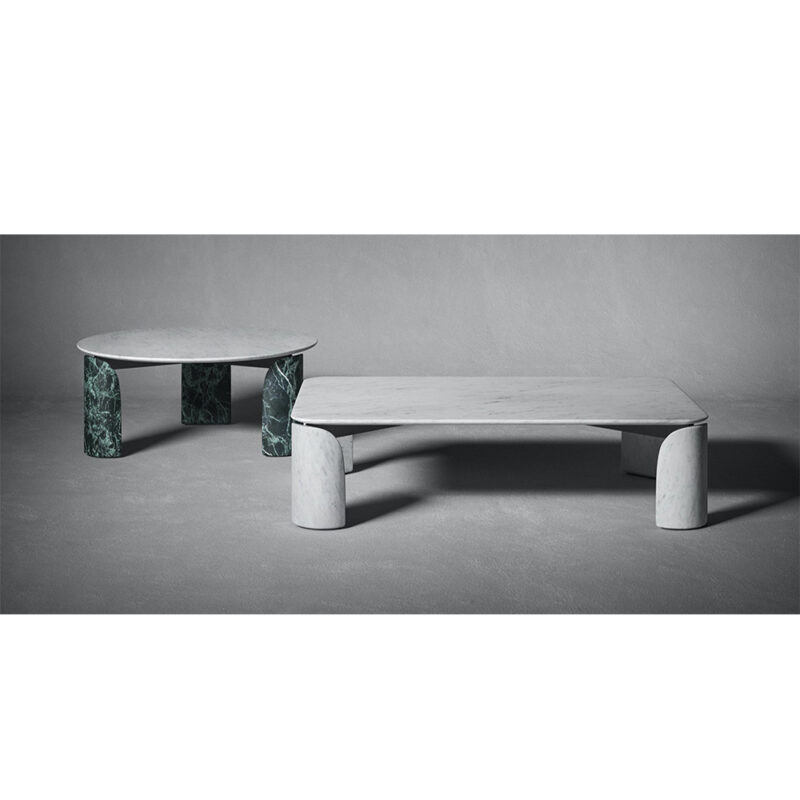
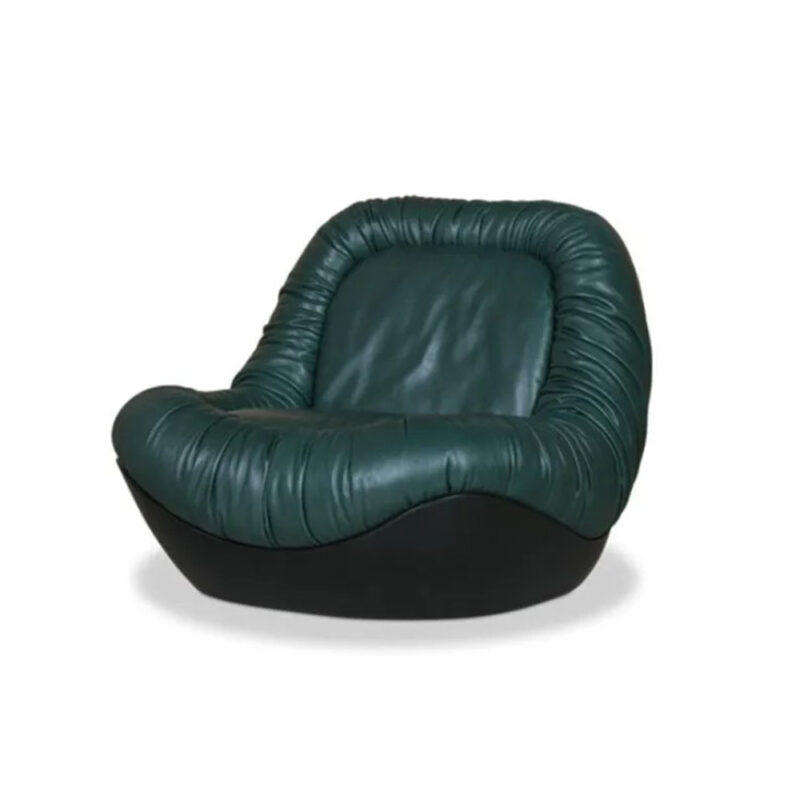
Among the recognizable furnishing elements we find:
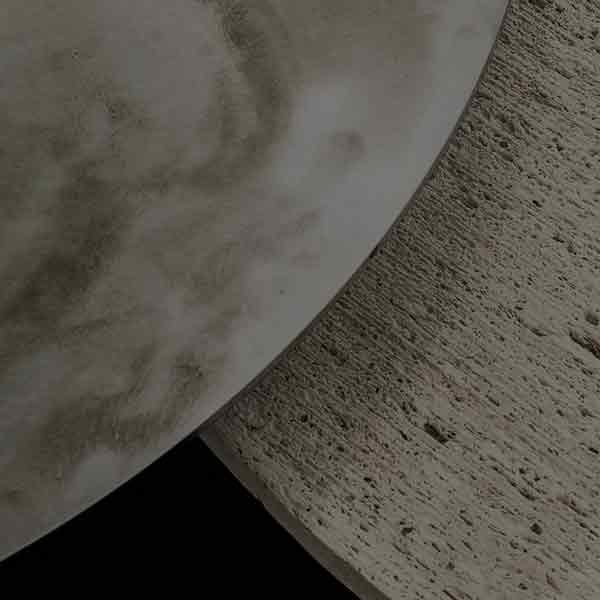
- Salvatori’s Taula marble coffee tables, designed by Patricia Urquiola
- the Barret swivel armchair by Baxter, with a Polimex structure, padding and covering in acrylic fibre
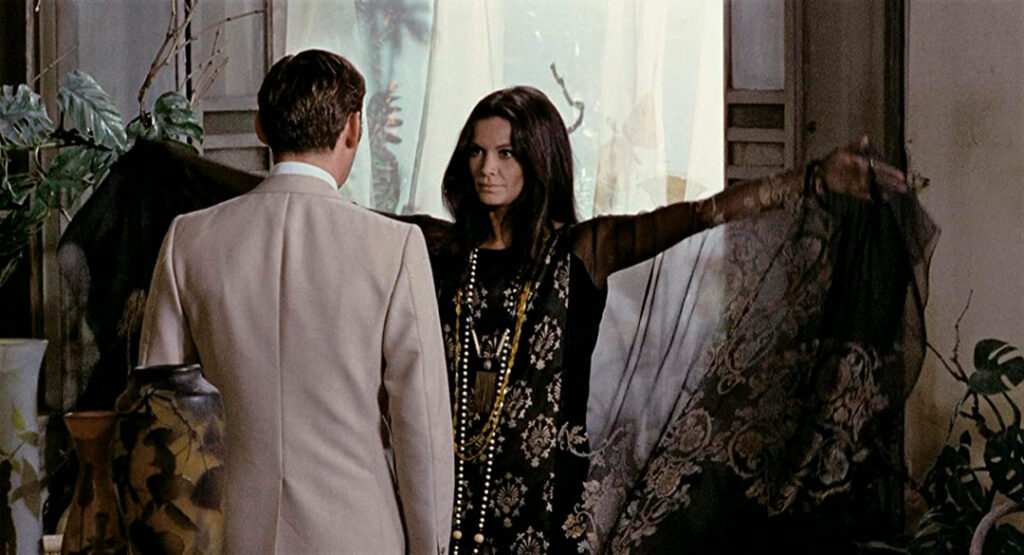
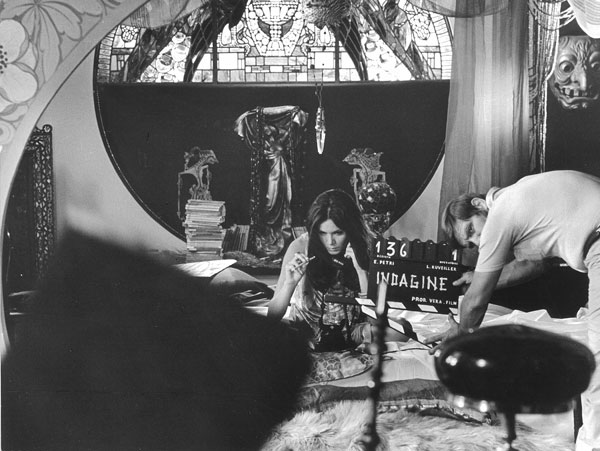
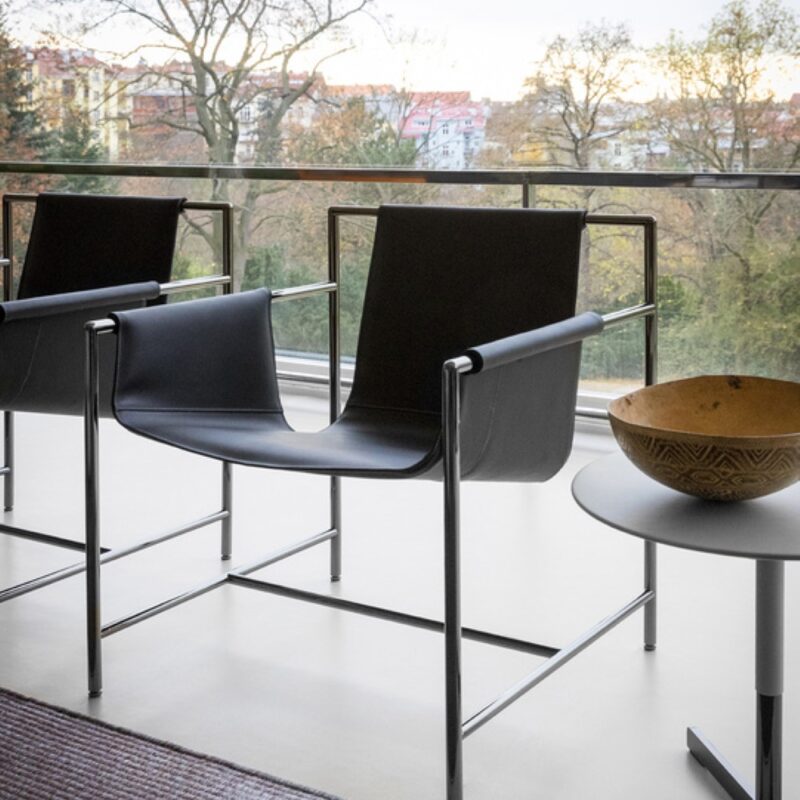
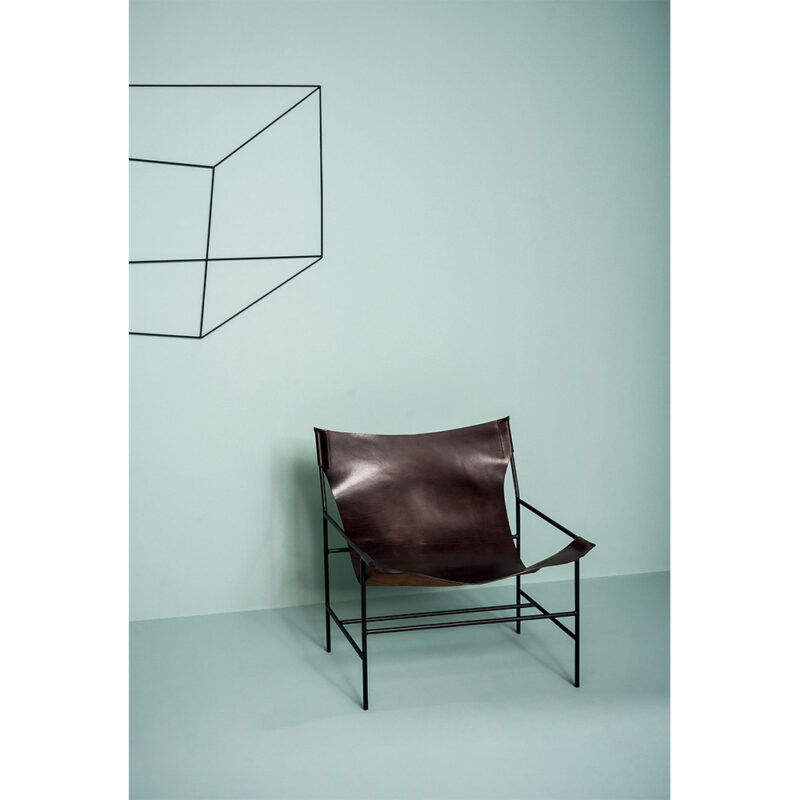
These austere spaces contrast sharply with Augusta’s “hippie Capitoline” alcove: a riot of Art Nouveau glass vases, floral wallpaper, plants, wicker armchairs and tables. Fabrics, embroidered caftans, curtains, and drapes create a colorful atmosphere, the only element of disruption being the black leather chairs and armchairs.
In a work deliberately rich in symbolism and contrasts, the policeman’s home becomes an expression of order, transparency, and duty, in stark contrast to the character’s dark side, which finds expression in his lover’s chaotic space.
In these spaces, designer pieces are recognizable as silent presences, traceable to a clear and rational stylistic line, heir to the democratic design of the Bauhaus. This language lives on in the minimalist interiors of those who preserve and enhance artistic messages capable of transcending time and trends.
Our website features numerous high-quality, designer furnishings, many of which can be custom-made to satisfy even the most demanding customers.